Daily Slokas,
Eternal Peace
Shashtanga Namaskar
Process and Meaning of Shashtanga namaskar
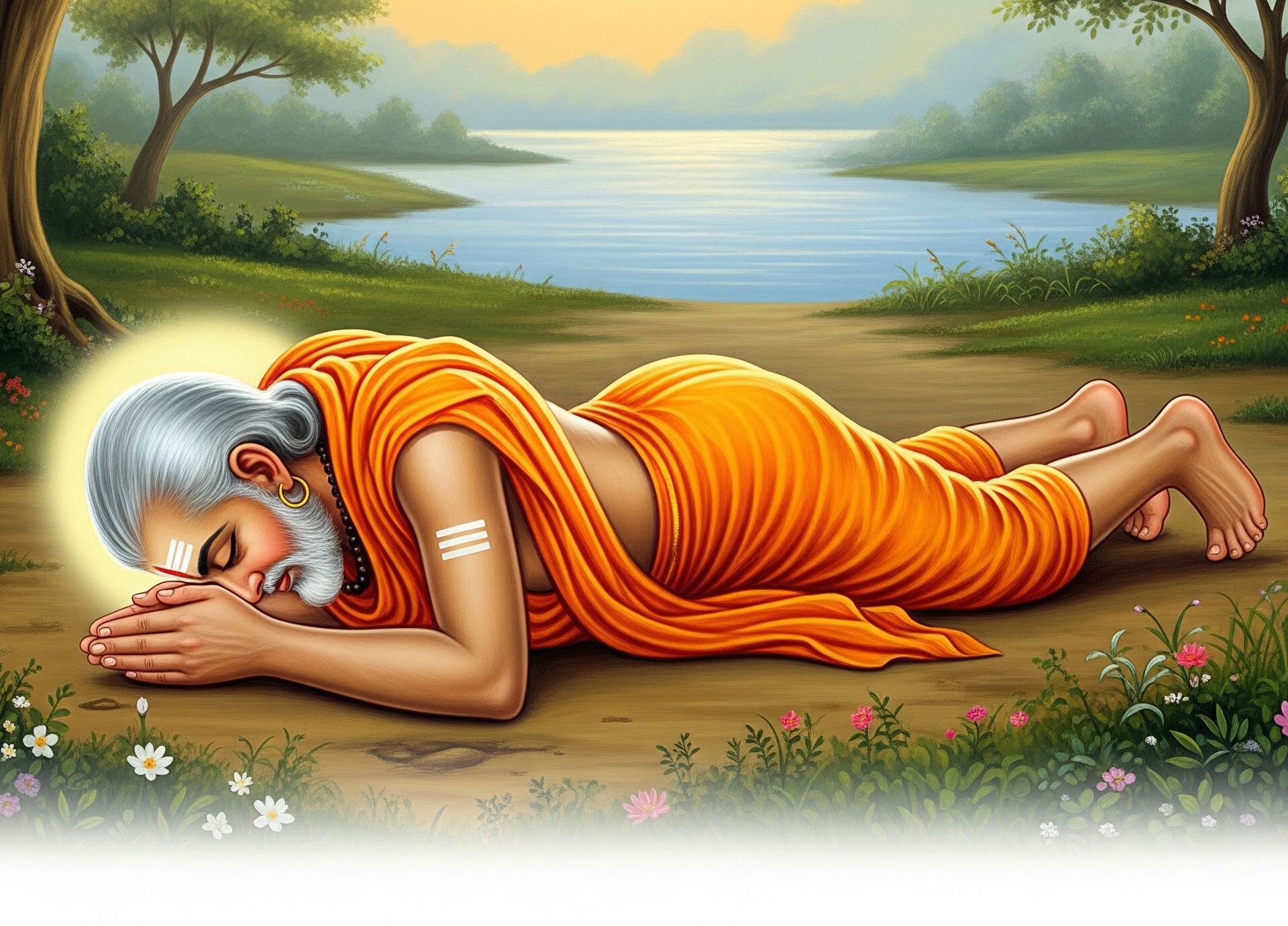
Shashtanga Namaskaram — A Complete Surrender to the Divine Sloka of Reference urasA SirasA dRuShTyA manasA vachasA tathA | padByAM karAByAM Karnaabyam praNamOSShTAnga uchyatE This verse outlines the eight limbs engaged in full-body prostration (Shashtanga Namaskaram) before the divine: • urasā (chest) • śirasā (head) • dṛṣṭyā (sight or eyes) • manasā (mind) • vacasā (speech) • padbhyāṁ (feet/legs) • karābhyāṁ (hands) • karṇābhyāṁ (ears) Note: This sloka is not meant to be chanted during the act of Namaskaram, but serves as a guide for its ideal form and intention. 🧘♂️ Essence of the Practice Shashtanga Namaskaram is more than a posture—it is a symbolic act of complete surrender and devotion. The devotee places eight body parts in contact with the ground, embodying humility and seeking divine grace and forgiveness. This namaskaram is traditionally prescribed for men. Women, due to their distinct energy flow (shakti), are advised to perform Panchanga Namaskaram (kneeling prostration), offering the same spiritual merit with appropriate reverence. Preparatory Guidelines • Ensure adequate space and the appropriateness of the location. For instance, Shashtanga Namaskaram is not allowed inside certain temple sanctums. • Maintain awareness and respect for local customs and temple rules. Step-by-Step Procedure 1. Initial Posture Stand with palms joined in front of the chest, fingers closed. Then raise both arms above the head, allowing shoulders to touch the ears. This symbolizes a straight, unwavering "danda" (stick). 2. Darshan and Descent Keep eyes open to absorb the divine form (Bhagavat Murti). Store this image in your heart. Bend forward, place hands on the ground, step back one leg at a time, and lie flat. 3. Full Prostration Extend hands above the head, shoulders touching ears. With eyes closed, meditate upon the divine image. Chant a mantra, such as “Jai Sri Ram,” “Har Har Mahadev,” or “Jai Mata Di.” 4. Symbolism of Touch Ensure the front of thighs, knees, chest, nose, hands, and feet touch the ground—symbolizing complete surrender. 5. Ears (Karṇābhyām) o Bring hands near chest o Tilt head right to touch right ear to ground o Tilt head left to touch left ear to ground o Repeat 3 times 6. Shoulders o Interlock hands behind the back o Tilt body right and touch right shoulder to ground o Tilt body left and touch left shoulder to ground o Repeat 3 times 7. Return to Standing Posture Lift head to once again receive darshan. Retrace your steps: hands above head, then back to chest in namaskar mudra. Final Reflections In this sacred act, one symbolically casts away ego and petitions for inner purification. Each limb offered to the earth is an offering to the divine—a gesture of complete humility and heartfelt devotion. Sarvam Shri Krishnarpanamastu 🙏 Sri Gurubhyo Namaha