
Blog Posts
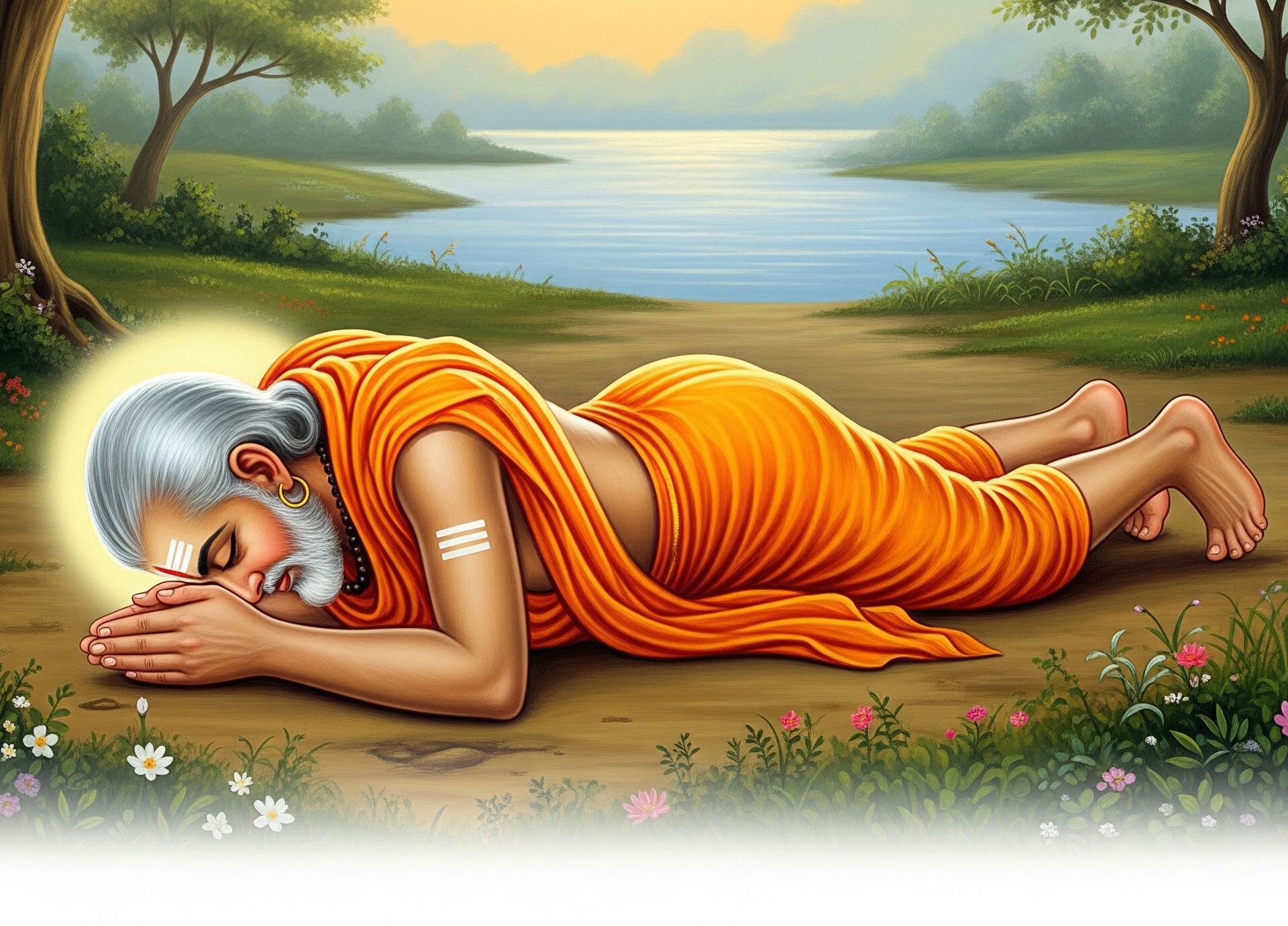
Shashtanga Namaskar
Shashtanga Namaskaram — A Complete Surrender to the Divine Sloka of Reference urasA SirasA dRuShTyA manasA vachasA tathA | padByAM karAByAM Karnaabyam praNamOSShTAnga uchyatE This verse outlines the eight limbs engaged in full-body prostration (Shashtanga Namaskaram) before the divine: • urasā (chest) • śirasā (head) • dṛṣṭyā (sight or eyes) • manasā (mind) • vacasā (speech) • padbhyāṁ (feet/legs) • karābhyāṁ (hands) • karṇābhyāṁ (ears) Note: This sloka is not meant to be chanted during the act of Namaskaram, but serves as a guide for its ideal form and intention. 🧘♂️ Essence of the Practice Shashtanga Namaskaram is more than a posture—it is a symbolic act of complete surrender and devotion. The devotee places eight body parts in contact with the ground, embodying humility and seeking divine grace and forgiveness. This namaskaram is traditionally prescribed for men. Women, due to their distinct energy flow (shakti), are advised to perform Panchanga Namaskaram (kneeling prostration), offering the same spiritual merit with appropriate reverence. Preparatory Guidelines • Ensure adequate space and the appropriateness of the location. For instance, Shashtanga Namaskaram is not allowed inside certain temple sanctums. • Maintain awareness and respect for local customs and temple rules. Step-by-Step Procedure 1. Initial Posture Stand with palms joined in front of the chest, fingers closed. Then raise both arms above the head, allowing shoulders to touch the ears. This symbolizes a straight, unwavering "danda" (stick). 2. Darshan and Descent Keep eyes open to absorb the divine form (Bhagavat Murti). Store this image in your heart. Bend forward, place hands on the ground, step back one leg at a time, and lie flat. 3. Full Prostration Extend hands above the head, shoulders touching ears. With eyes closed, meditate upon the divine image. Chant a mantra, such as “Jai Sri Ram,” “Har Har Mahadev,” or “Jai Mata Di.” 4. Symbolism of Touch Ensure the front of thighs, knees, chest, nose, hands, and feet touch the ground—symbolizing complete surrender. 5. Ears (Karṇābhyām) o Bring hands near chest o Tilt head right to touch right ear to ground o Tilt head left to touch left ear to ground o Repeat 3 times 6. Shoulders o Interlock hands behind the back o Tilt body right and touch right shoulder to ground o Tilt body left and touch left shoulder to ground o Repeat 3 times 7. Return to Standing Posture Lift head to once again receive darshan. Retrace your steps: hands above head, then back to chest in namaskar mudra. Final Reflections In this sacred act, one symbolically casts away ego and petitions for inner purification. Each limb offered to the earth is an offering to the divine—a gesture of complete humility and heartfelt devotion. Sarvam Shri Krishnarpanamastu 🙏 Sri Gurubhyo Namaha
Read More >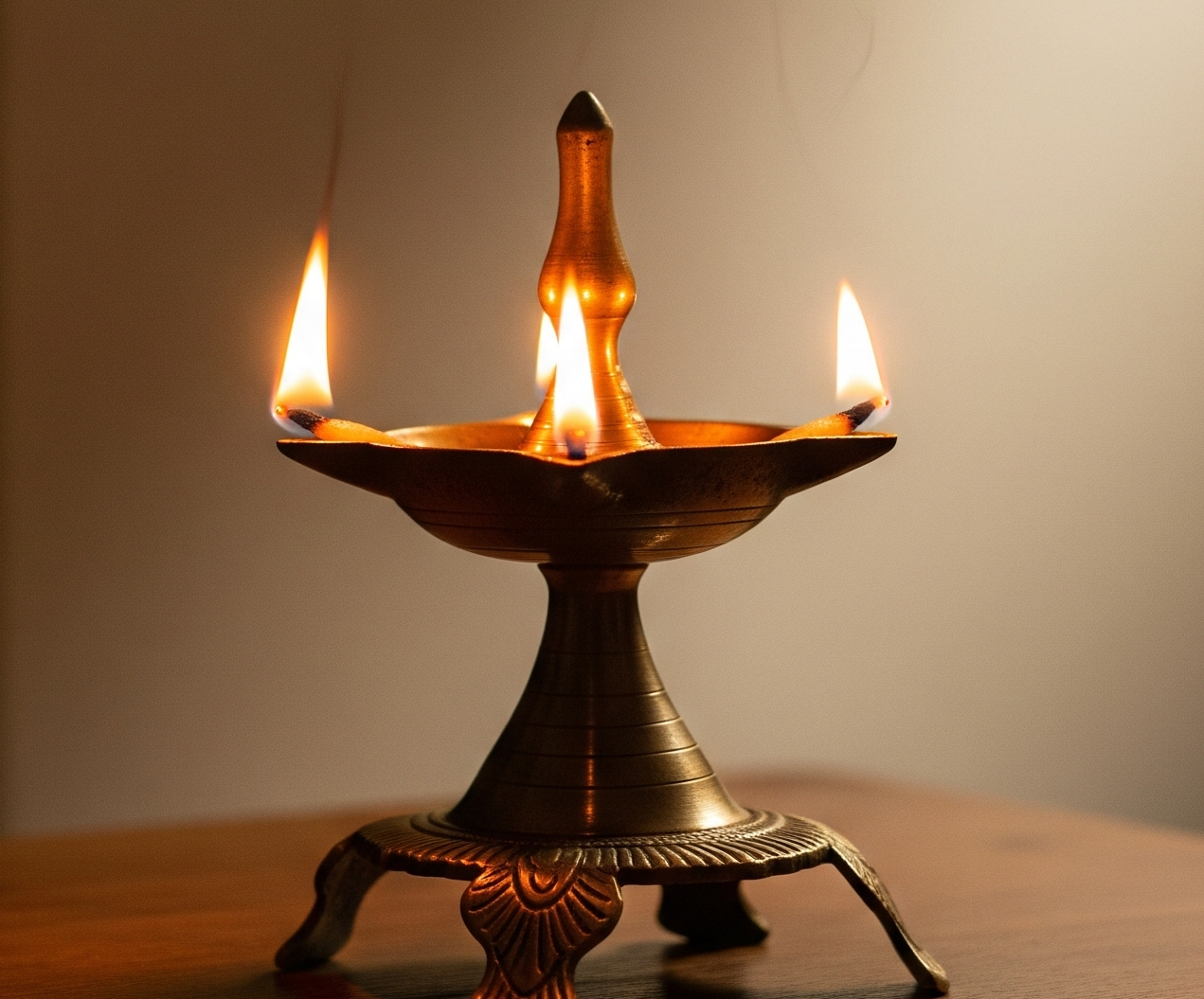
Lighting the Deepam — Illuminating the Path of Divine Knowledge
The Process of Lighting the Deepam 1. Preparation A lamp holder is filled with ghee or oil—both sanctified mediums. Three cotton wicks are immersed, leaving the tip exposed at the top. 2. Ignition The wick is lit, producing the Jyoti. A gentle application of Kumkum or Haldi (Turmeric) adorns the lamp, signifying auspiciousness. 3. Invocation A traditional sloka is recited as a mark of respect and devotion: Deepam JyOti parabrahmam Deepam sarva tamO haram DeepEna SadhyatE sarvam Deepa Laxmi namOstutE Meaning: I offer my salutations to the Deepam, the radiant embodiment of Parabrahmam, the Supreme. May its light dispel all darkness and inertia within me. May it empower me to undertake even the most difficult endeavors. This Jyoti is the very presence of Goddess Lakshmi—auspicious and radiant, to whom I bow in reverence. Inner Significance — Symbolism of the Flame The Jyoti embodies knowledge, wisdom, and the triumph of light over ignorance. Just as Surya Devata pierces the night with dawn’s rays, the lamp uplifts the devotee’s consciousness from delusion to clarity. While one might argue an electric bulb too dispels darkness, the Deepam holds layers of spiritual symbolism absent in modern lighting. • Ghee/Oil (Fuel): Represents Vaasanas — latent tendencies and attachments. • Wick: Embodies the Ego, the self-identity that limits spiritual expansion. • Flame: The Divine Knowledge which consumes both—leaving behind illumination and purity. Thus, by lighting the Deepam, the aspirant is reminded of their spiritual journey—toward burning away ignorance and ego to reveal the inner light of the Self. A Gentle Reminder of the Goal The simple act of lighting the Deepam is a moment of profound introspection. Each flicker of flame whispers the eternal wisdom: burn away illusion, seek truth, and walk steadily toward divine realization. Sarvam Sri Krishnarpanamastu 🙏 Sri Gurubhyo Namaha
Read More >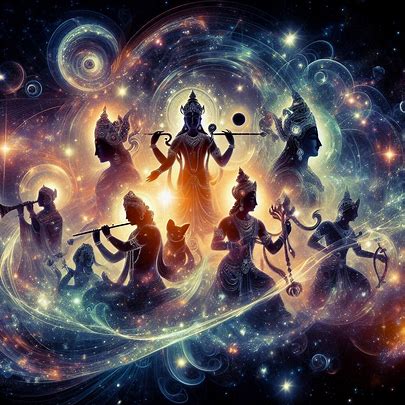
Why do we have so many Gods in Hinduism?
One of the most common questions people ask is—why does Hinduism have so many gods? The simple answer is: Hinduism does not have many gods, but one supreme divine presence expressed in many forms. A beautiful way to understand this concept is through fire (Agni). Fire appears in different forms and serves various purposes, yet it remains the same fundamental element. • The sacred fire in rituals is called Homam • A lamp lit for prayer is known as Deepam • The fire that warms a home is a heater • The fire that cooks food is a stove • The internal fire that digests food in our body is Jatharagni Though each has a different name and function, they are all fire. In the same way, God manifests in different forms, appearing as Krishna, Ganesha, Saraswati, Shiva, or Lakshmi, depending on the need and devotion of the worshipper. The One Supreme Energy—Parabrahma At the heart of this belief is Parabrahma, the formless, all-pervading divine power that is the source of all existence. In the Purusha Suktam, Parabrahma is described as: "Ajāyamano bahudhā vijāyate" — The One who has no birth, yet manifests in countless forms. Parabrahma assumes different identities to connect with devotees on a personal level: • A devotee who seeks wisdom may worship Mother Saraswati • One who desires protection may turn to Lord Shiva • One seeking prosperity may worship Goddess Lakshmi • Before beginning a new task, devotees seek blessings from Lord Ganesha Why So Many Forms? The Simplicity of Worship The human mind finds it difficult to grasp the infinite, formless divine presence. By assigning a name, a shape, and a personality to the divine, worship becomes accessible and meaningful. It is easier to imagine Krishna in yellow silk garments, playing his flute, or visualize Mother Durga’s protective presence, like a mother caring for her children. Personally, the image of Krishna lifting the Govardhana mountain reminds me of his eternal protection over his devotees. Thus, the many forms of God simplify devotion, making it intimate, relatable, and personal. Bringing Fire and Devotion Together Just as we light a matchstick to ignite a fire, worship ignites our devotion toward God. The divine presence may take any form—Krishna, Ganesha, Lakshmi, or Shiva—whatever resonates with the heart of the devotee.
Read More >